
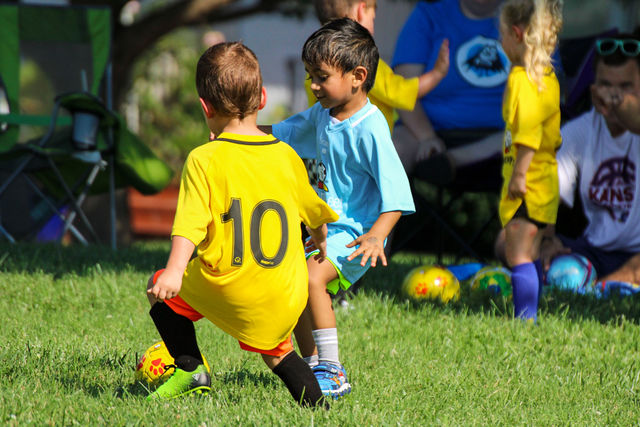

Gladstone families: that wrestling match on the living room floor is actually building important life skills.
Last updated May 2026
Your toddler tackles you the moment you walk through the door. They wrestle with their older sibling until someone cries. They crash into the couch, tumble off the bed, and treat every surface as a launching pad. You have heard different opinions from different parents: some say let them go, others say it is too rough. The truth is that roughhousing — when done safely — is one of the most beneficial activities for a young child’s development. In Gladstone, where families fill the backyards and parks of neighborhoods like Oak Park and Linden Hills, learning to navigate physical play is a natural and important part of growing up.
Why This Matters for Gladstone Families
Rough-and-tumble play has been studied extensively by child development researchers, and the findings are clear: this type of play builds more than just physical strength. It teaches children to read social cues, regulate their own strength, negotiate boundaries, and understand cause and effect. When a child wrestles with a parent or peer, they are learning: “If I push too hard, the other person stops playing.” “If I am too rough, my friend moves away.” These are lessons in empathy and self-control that no worksheet can teach. Gladstone families have plenty of space for active play — Oak Park offers wide-open fields, and the neighborhood streets and backyards provide room to run. But roughhousing requires a different kind of environment: one where it is okay to fall, to bump into things, and to test physical limits without serious consequences. Creating that safe environment at home, and finding outside programs that understand the value of active, physical play, is the key to letting your child reap the benefits of roughhousing without the worry.3 Guidelines for Safe Roughhousing at Home
- Establish a “safe word” or signal. Before any roughhousing session, agree on a word or gesture that means “stop.” This gives your child a sense of control and teaches them that boundaries matter. When the safe word is used, play stops immediately — no exceptions. Over time, your child will internalize this lesson and apply it in their play with peers.
- Create a soft landing zone. Pillows, cushions, exercise mats, or even a pile of laundry fresh from the dryer — anything that makes falling feel safe. When children know the landing is soft, they take appropriate risks that build confidence and body awareness. Gladstone parents can dedicate a corner of the living room or basement to this purpose, making it easy to transition from calm to active play and back again.
- Follow your child’s lead on intensity. Some days your child wants full-contact wrestling; other days they want gentle pushing games. Let them set the tone. Watch their face and body language — if they are laughing and engaged, the intensity is right. If they tense up or pull away, dial it back. This teaches them to trust their own feelings about physical interaction and builds the foundation for healthy boundaries later in life.
When Roughhousing Needs a Structured Setting
Home roughhousing is wonderful, but it has limits. Your furniture can only take so many crashes, and your back can only handle so many toddler tackles before you need a break. Structured programs that incorporate active, physical play offer a complement to what you do at home. In a dedicated facility with padded floors and age-appropriate equipment, your child can tumble, roll, jump, and wrestle safely without the constraints of a living room. These programs also introduce the social dimension of physical play with peers, teaching children to negotiate space, take turns, and respect others’ bodies in a guided setting.How Happy Feet Kansas City Can Help
Happy Feet Kansas City’s Northland location on Antioch Road is conveniently close to Gladstone and provides exactly the kind of structured, active environment that active toddlers need. Our program channels that rough-and-tumble energy into purposeful movement: climbing, jumping, rolling, and balancing — all within a safe, padded space designed for young children. The structure of a class setting also teaches important social skills: waiting your turn, following directions, and respecting personal space while still having plenty of active fun. Bob the Ball guides children through imaginative adventures that let them move with full energy in a controlled, positive environment. Come try a free class and give your toddler the safe, active outlet they are craving.
Give your toddler a safe place to move, tumble, and grow. Try a free class at our Northland location.
Request Your Free Class
Ready to see if your toddler loves it? Grab a free trial class below — no pressure, no commitment. Ages 2–6, $50/mo after the free class.