Positive Reinforcement Techniques for Toddlers Who Shut Down in Blue Springs, MO

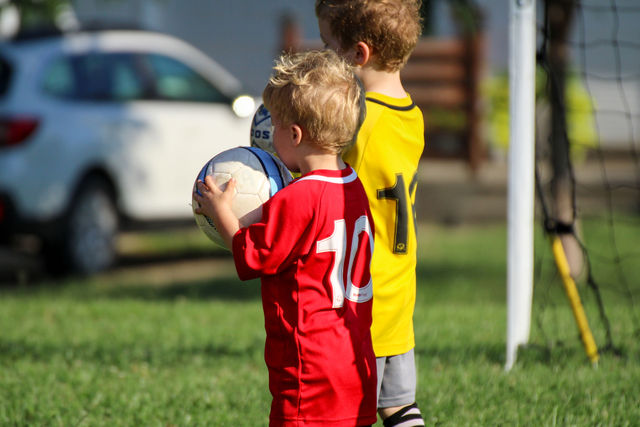
Home › HappyFeet KC Blog › Personality & Behavioral Challenges When challenge feels like threat, the right encouragement makes all the difference. Last updated May 2026 You ask your toddler to try something new — a different shape of puzzle, a slightly higher step at Adams Pointe Park playground — and instead of attempting it, they freeze. They turn away. They say “no” in a small, flat voice and refuse to engage. For Blue Springs parents, this shutdown response can be confusing and concerning. But it is actually a sign of a sensitive, self-protective temperament that, with the right approach, can grow into quiet confidence. Why This Matters for Blue Springs Families Blue Springs is a family-oriented community with a strong sense of togetherness, from the annual Blue Springs Fall Festival to the packed playgrounds at Pink Hill Park. Families here tend to be close-knit, and parents pour their hearts into giving their children every opportunity. But for a toddler who shuts down when challenged, even loving encouragement can feel like pressure. The more a parent says “you can do it!” with bright enthusiasm, the more the child may retreat. The shutdown response is a protective mechanism. When a sensitive toddler encounters a task they are not sure they can master, their nervous system hits the brakes. It is not laziness or stubbornness — it is self-preservation. The key is to reduce the perceived stakes and rebuild the association between “trying something new” and “feeling safe.” 3 Positive Reinforcement Techniques That Work Use descriptive praise instead of evaluative praise. Instead of “good job!” try “I saw you look at that step for a long time. You were figuring it out.” Descriptive praise focuses on effort and process, which feels less pressuring to sensitive children than global approval. Offer the invitation and then look away. When you present a new activity, make eye contact and invite them once, then look away and give them space. Some toddlers shut down because your expectant gaze feels like a spotlight. When you redirect your attention, the pressure lifts and they often move toward the activity on their own. Break challenges into absurdly small steps. If your child refuses to climb a structure, celebrate them simply touching it. If they will not try a new food, celebrate them letting it sit on their plate. Each tiny step builds a chain of small victories that rewires the “new things are scary” pattern. What to Look for in a Program For a child who shuts down under challenge, the ideal program offers low-pressure invitations to participate, with no penalty for watching. Look for instructors who are patient, who do not single children out, and who model skills themselves before asking children to try. The best environment is one where the child can observe for as long as they need, and where every attempt — no matter how small — is met with calm, warm acknowledgment rather than loud celebration. How Happy Feet Kansas City Can Help Happy Feet Kansas City’s Lee’s Summit location (inside the Soccer Box facility, convenient for Blue Springs families) is a haven for sensitive children. Our coaches are trained to issue gentle, non-demanding invitations: “If you would like to join us, Bob the Ball is looking for friends to help him cross the river. If you want to watch for now, that is okay too.” We never put a child on the spot. We never demand participation. And we celebrate effort — tiny, quiet, hesitant effort — with a simple nod and a warm smile. Over time, children who once shut down begin to tentatively join in, then eagerly participate. Try a free class designed for sensitive learners. Give your sensitive child a gentle, pressure-free place to grow. Serving Kansas City families since 2003 · 30+ partner schools

Teaching Body Awareness to Prevent Hitting and Pushing in Liberty, MO

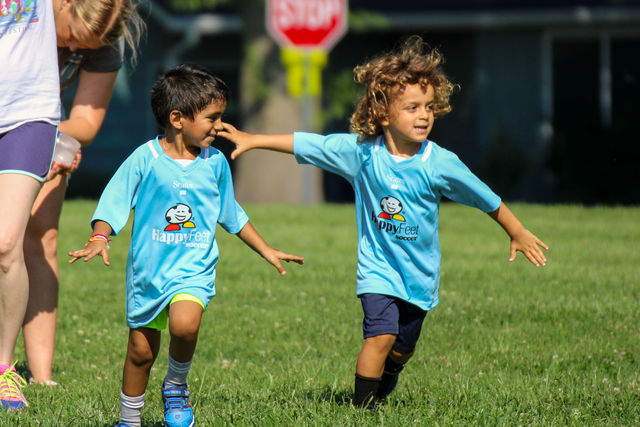
Home › HappyFeet KC Blog › Personality & Behavioral Challenges Help your toddler understand their body in space — and keep their hands to themselves. Last updated May 2026 You are at the Liberty Community Center play area, and suddenly your toddler shoves another child for no reason you can see. Your face flushes. You apologize to the other parent. On the drive home past the Liberty Square, you wonder: why does my child keep hitting? The answer might not be what you think. Most toddler aggression is not anger — it is a lack of body awareness. Why This Matters for Liberty Families Liberty is a growing community with a strong small-town feel, from the historic downtown square to the expansive Stocksdale Park. Families here value good citizenship and kindness, which makes toddler hitting and pushing feel especially alarming. But here is what child development research shows: most young children who hit do not intend to hurt. They simply do not yet have a fully developed sense of where their body ends and another person’s begins. Body awareness — also called proprioception — is the sense that tells your brain where your limbs are in space without having to look. In toddlers, this sense is still developing. A child who pushes may simply be trying to move past someone and not know how. A child who hits during a hug may be trying to express affection with an uncalibrated arm. The fix is not punishment; it is practice in body awareness. 3 Body Awareness Activities for Liberty Families The “personal bubble” game. Hold a hula hoop around your child and explain that this is their “bubble.” Walk around the living room or yard, practicing keeping the bubble from touching furniture or people. Over time, they internalize the sense of personal space — even without the hoop. Heavy work for body regulation. Activities that involve pushing, pulling, and lifting help the brain map the body. Have your child push a laundry basket across the room, pull a wagon around the block near Liberty Square, or carry a stack of lightweight books to the shelf. Mirror me. Stand facing your child and make slow, deliberate movements — arms up, arms out, touch your nose, stomp your foot. Ask them to copy you. This strengthens the brain-body connection in a playful, low-pressure way. It is especially useful before a playdate at Stocksdale Park. What to Look for in a Program When choosing a program for a child who struggles with body awareness — hitting, pushing, bumping into others — look for one that emphasizes spatial awareness and controlled movement. Avoid programs that use punitive approaches to aggression. Instead, find coaches who model gentle touch, teach personal space concepts, and structure activities so children are not crowded together waiting for turns. A program with clear physical boundaries — like designated spots, waiting lines with markers, and individual space for each child — can make a transformative difference. How Happy Feet Kansas City Can Help Happy Feet Kansas City’s Northland location on Antioch Road serves many Liberty families, and our program is built around exactly the kind of structured, space-aware movement that helps toddlers develop body awareness. Each child has their own spot in the circle. Activities are designed to give every child room to move without crowding. Our coaches use clear, gentle language about personal space: “Feet in your own spot. Hands to yourself. Let’s show Bob the Ball how we keep our bodies safe.” Over weeks of consistent practice, children internalize these spatial boundaries — and the hitting and pushing naturally decrease. Try a free class at our Antioch Road location. Give your child the body awareness tools they need to play safely with others. Serving Kansas City families since 2003 · 30+ partner schools
Channeling Big Emotions Into Physical Activity in Prairie Village, KS

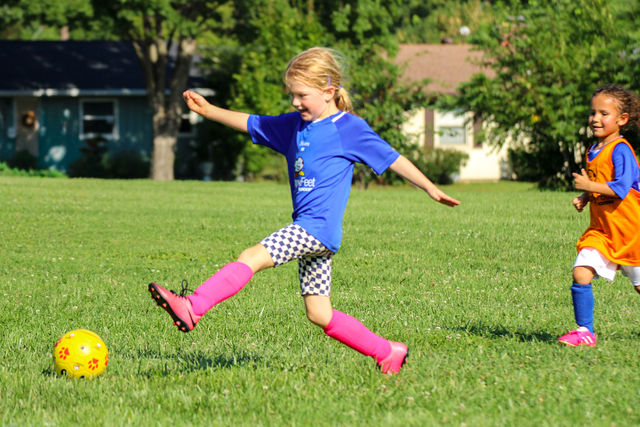
Home › HappyFeet KC Blog › Personality & Behavioral Challenges When feelings are too big for words, movement helps. Last updated May 2026 Serving Kansas City families since 2003 · 30+ partner schools The meltdown starts in the cereal aisle at the Prairie Village Hy-Vee, or maybe right as you pull into the driveway near Harmon Park. Your three-year-old is crying, screaming, or collapsing into a puddle on the floor — and no amount of reasoning will reach them. For Prairie Village parents, big emotions are a daily reality. The good news? Physical activity is one of the most effective ways to help a dysregulated toddler reset. Why This Matters for Prairie Village Families Prairie Village is known for its tight-knit neighborhoods, tree-lined streets, and family-friendly parks like Meadowbrook Park and Harmon Park. It is the kind of place where children play outside, ride bikes on the sidewalk, and run into friends at the grocery store. But even in this idyllic setting, toddlers experience overwhelming emotions — and they do not yet have the language or impulse control to process them. A tantrum at the Prairie Village Pool or a meltdown at the end of a playdate at Creekwood Park is not bad behavior; it is a signal that your child’s nervous system is overloaded and needs to release that energy through movement. The body-mind connection is powerful in early childhood. When you get a toddler moving, you help their brain organize itself. Running, jumping, spinning, and even silly dancing activate the vestibular system and release tension that otherwise comes out as tears or aggression. 3 Physical Strategies for Big Emotions The heavy-work reset. Before emotions peak, try activities that involve pushing, pulling, or carrying. Have your child help you carry the groceries from the car, push a heavy cart at the store, or drag a wagon around the block. These “heavy work” movements are deeply calming to the nervous system. Animal walks for regulation. When you see frustration building, shift gears into play: “Can you walk like a bear? Can you hop like a frog?” Animal walks combine deep breathing, coordination, and fun — a powerful emotional reset that works wonders after a tense moment at home near 75th Street. Create a “big movement” routine after high-friction times. Transitions — leaving the park, saying goodbye to friends, ending screen time — are prime tantrum territory. Build in two minutes of jumping, spinning, or running between the trigger activity and the next thing. It makes a remarkable difference. What to Look for in a Program When looking for a group activity for a child who experiences big emotions, seek out programs that prioritize physical movement and have staff trained in emotional regulation techniques. The best programs do not punish or isolate children for having feelings; instead, they offer redirection through movement. A good sign is a program that allows children to step out of an activity and rejoin when ready, without shame or pressure. How Happy Feet Kansas City Can Help Happy Feet Kansas City serves many Prairie Village families at our Overland Park location. Our classes are built around constant, joyful movement — running, hopping, following Bob the Ball through an imaginative story, and releasing the kind of big energy that toddlers naturally have. Our coaches are trained to recognize when a child is becoming dysregulated and to offer a movement-based reset rather than a time-out or reprimand. For the child who needs to move to feel better, our program is a natural fit. Come try a free class and see how movement transforms big feelings. Give your child a place where big feelings are welcome and movement is the answer.
Safe Ways for Toddlers to “Roughhouse” and Learn Physical Boundaries

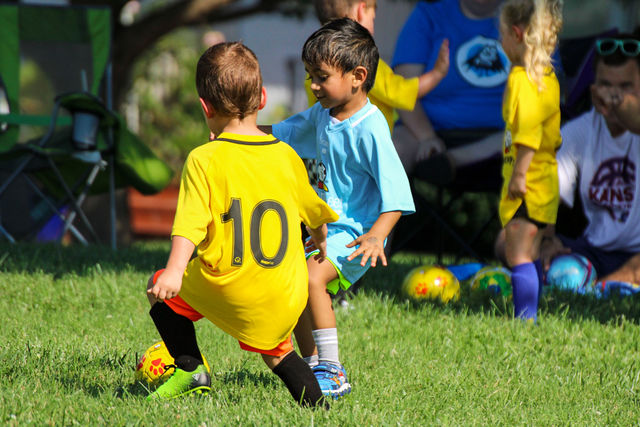
Home › HappyFeet KC Blog › Physical Milestones & Energy Management Gladstone families: that wrestling match on the living room floor is actually building important life skills. Last updated May 2026 Serving Kansas City families since 2003 · 30+ partner schools Your toddler tackles you the moment you walk through the door. They wrestle with their older sibling until someone cries. They crash into the couch, tumble off the bed, and treat every surface as a launching pad. You have heard different opinions from different parents: some say let them go, others say it is too rough. The truth is that roughhousing — when done safely — is one of the most beneficial activities for a young child’s development. In Gladstone, where families fill the backyards and parks of neighborhoods like Oak Park and Linden Hills, learning to navigate physical play is a natural and important part of growing up. Why This Matters for Gladstone Families Rough-and-tumble play has been studied extensively by child development researchers, and the findings are clear: this type of play builds more than just physical strength. It teaches children to read social cues, regulate their own strength, negotiate boundaries, and understand cause and effect. When a child wrestles with a parent or peer, they are learning: “If I push too hard, the other person stops playing.” “If I am too rough, my friend moves away.” These are lessons in empathy and self-control that no worksheet can teach. Gladstone families have plenty of space for active play — Oak Park offers wide-open fields, and the neighborhood streets and backyards provide room to run. But roughhousing requires a different kind of environment: one where it is okay to fall, to bump into things, and to test physical limits without serious consequences. Creating that safe environment at home, and finding outside programs that understand the value of active, physical play, is the key to letting your child reap the benefits of roughhousing without the worry. 3 Guidelines for Safe Roughhousing at Home Establish a “safe word” or signal. Before any roughhousing session, agree on a word or gesture that means “stop.” This gives your child a sense of control and teaches them that boundaries matter. When the safe word is used, play stops immediately — no exceptions. Over time, your child will internalize this lesson and apply it in their play with peers. Create a soft landing zone. Pillows, cushions, exercise mats, or even a pile of laundry fresh from the dryer — anything that makes falling feel safe. When children know the landing is soft, they take appropriate risks that build confidence and body awareness. Gladstone parents can dedicate a corner of the living room or basement to this purpose, making it easy to transition from calm to active play and back again. Follow your child’s lead on intensity. Some days your child wants full-contact wrestling; other days they want gentle pushing games. Let them set the tone. Watch their face and body language — if they are laughing and engaged, the intensity is right. If they tense up or pull away, dial it back. This teaches them to trust their own feelings about physical interaction and builds the foundation for healthy boundaries later in life. When Roughhousing Needs a Structured Setting Home roughhousing is wonderful, but it has limits. Your furniture can only take so many crashes, and your back can only handle so many toddler tackles before you need a break. Structured programs that incorporate active, physical play offer a complement to what you do at home. In a dedicated facility with padded floors and age-appropriate equipment, your child can tumble, roll, jump, and wrestle safely without the constraints of a living room. These programs also introduce the social dimension of physical play with peers, teaching children to negotiate space, take turns, and respect others’ bodies in a guided setting. How Happy Feet Kansas City Can Help Happy Feet Kansas City’s Northland location on Antioch Road is conveniently close to Gladstone and provides exactly the kind of structured, active environment that active toddlers need. Our program channels that rough-and-tumble energy into purposeful movement: climbing, jumping, rolling, and balancing — all within a safe, padded space designed for young children. The structure of a class setting also teaches important social skills: waiting your turn, following directions, and respecting personal space while still having plenty of active fun. Bob the Ball guides children through imaginative adventures that let them move with full energy in a controlled, positive environment. Come try a free class and give your toddler the safe, active outlet they are craving. Give your toddler a safe place to move, tumble, and grow. Try a free class at our Northland location.
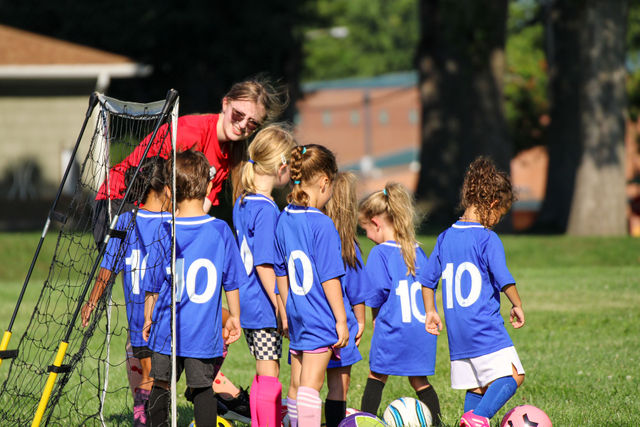
Indoor Gross Motor Activities for 2-Year-Olds — Northland KC Rainy Days

Home › HappyFeet KC Blog › Physical Milestones & Energy Management Indoor Gross Motor Skill Activities for 2-Year-Olds on Rainy Northland Days When the rain keeps you inside, these movement ideas keep your toddler growing strong. If you’re in the Northland, HappyFeet KC offers toddler soccer classes designed for exactly this — check your local schedule for a free trial. Last updated May 2026 HF Happy Feet Kansas City Editorial Team Serving Kansas City families since 2003 · 30+ partner schools The Northland spring forecast calls for rain — again. You have already been to Macken Park twice this week, the living room floor is littered with toys, and your two-year-old is bouncing off the couch cushions like they are training for the Olympics. On rainy days in Kansas City’s Northland, cabin fever hits hard and fast. But those pent-up wiggles are actually a sign that your child is ready to build important physical skills, even without a trip to the playground. Why This Matters for Northland Families Northland parents face a particular challenge when the weather turns wet. Unlike some parts of the metro with dense clusters of indoor play spaces, the Northland’s options can feel spread out. Between the rainy spring months and the bitter winter cold, indoor gross motor activities become essential for keeping your toddler on track developmentally. The good news is that you do not need a dedicated facility to help your child build the large-muscle skills that matter most at this age. A little creativity and a clear understanding of what gross motor development looks like at age two can turn a rainy afternoon into a productive movement session. Gross motor skills — the abilities that involve the large muscles of the arms, legs, and torso — are the foundation for everything else your toddler will do physically. Running, jumping, climbing, balancing, and throwing all fall under this umbrella. When these skills develop on schedule, your child gains confidence, independence, and the physical readiness for more complex movements later. A rainy day is not a lost day; it is an opportunity to practice indoors. 3 Simple Indoor Gross Motor Activities for Northland Toddlers Build a cushion mountain. Stack couch cushions, bed pillows, and folded blankets on the floor to create a soft climbing surface. Two-year-olds love the challenge of scaling a wobbly pile and the victory of reaching the top. This activity builds leg strength, balance, and spatial awareness. Spot your child as they climb, and let them decide how high to go — they know their limits better than you might think. Play “follow the leader” with animal walks. Toddlers are natural imitators. Crawl like a bear on all fours, hop like a frog from a squat, waddle like a penguin with feet apart, and slither like a snake on your belly. Each of these movements targets different muscle groups and challenges your child’s coordination in a playful way. Plus, watching a two-year-old attempt a bear crawl is guaranteed to make you smile. Set up a hallway bowling alley. Use lightweight plastic pins or empty water bottles and a soft ball. The narrow hallway of a Northland home or apartment naturally contains the ball and keeps the game focused. Your toddler will practice aiming, throwing, and chasing the ball — all excellent gross motor work disguised as pure fun. What to Look for in a Structured Indoor Program If you decide you need a break from setting up your own living room obstacle course, a structured indoor program can be a game-changer. Look for a program that prioritizes free movement over rigid instruction. Two-year-olds learn best when they are allowed to explore a space at their own pace. A good program will have age-appropriate equipment — soft mats, low balance beams, small ramps — and instructors who understand that a two-year-old’s attention span is measured in minutes, not hours. Location matters too, especially on rainy days when you do not want a long drive. Northland families benefit most from a program close to home. How Happy Feet Kansas City Can Help Happy Feet Kansas City offers indoor classes at our Northland location on Antioch Road, providing a warm, dry space for your two-year-old to develop gross motor skills on even the rainiest days. Our program is built around imaginative play — we use stories, music, and a friendly character named Bob the Ball to guide children through movement activities that build strength, balance, and coordination. Every class is designed with toddler development in mind, giving your child the freedom to move while gently challenging them to try new skills. We welcome Northland families to try a free class and see how much fun gross motor development can be — rain or shine. Rainy day? Bring your toddler to our Northland indoor program for a free trial class.
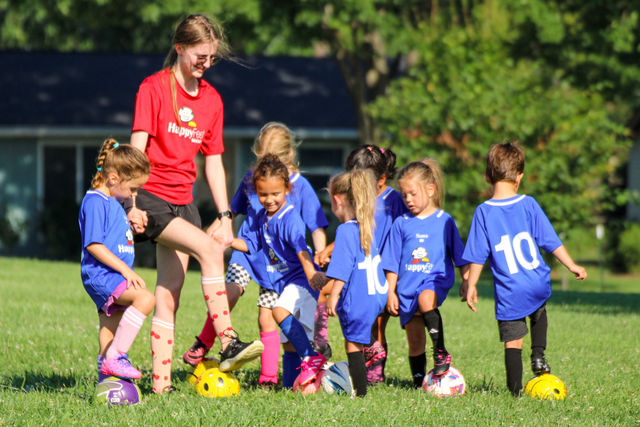
Building Social Grit Toddlers Playground Conflict Lenexa KS

Home › HappyFeet KC Blog › Socialization & Emotional Growth Building “Social Grit”: Helping Toddlers Navigate Playground Conflict at Sar-Ko-Par Park Teaching resilience, boundary-setting, and recovery skills at Lenexa’s favorite playgrounds. If you’re in Lenexa, HappyFeet KC offers toddler soccer classes designed for exactly this — check your local schedule for a free trial. Last updated May 2026 HF Happy Feet Kansas City Editorial Team Serving Kansas City families since 2003 · 30+ partner schools You are sitting on a bench at Sar-Ko-Par Park, watching your toddler navigate the playground obstacle course, when it happens: another child grabs the handle your child was reaching for. Your child freezes, looks at you, and either bursts into tears or shoves back. How you handle that 10-second moment determines whether your child learns social grit—the ability to handle small conflicts, recover quickly, and try again—or learns to avoid conflict altogether. For Lenexa parents, the playground is the training ground for the social resilience their child will need for the rest of their life. Why This Matters for Lenexa Families Lenexa is a city of wonderful parks: Sar-Ko-Par Park with its famous pagoda and pond, Black Hoof Park with its sprawling playground, the Lenexa Community Center’s indoor play areas, and Mize Lake. These are the neighborhood gathering spots where Lenexa toddlers get their first taste of social conflict—and where parents get their first chance to teach resilience. But many parents freeze in these moments, unsure whether to intervene, let children work it out, or redirect to another activity. Social grit is not about winning or losing a disagreement. It is about learning that conflict is survivable, that feelings can be mended, and that you can go back to playing with the same child five minutes after a disagreement. This skill—the ability to repair and reconnect—is one of the strongest predictors of social success in school. 3 Ways to Build Social Grit at the Playground Coach the script, not the outcome. Instead of solving the conflict for your child, whisper a script: “You can say, ‘I was using that. Can I have it back when you are done?’” Giving them the words builds their toolkit without removing their agency. Practice the “return to play.” After a conflict, guide your child back toward the same child or activity. Say: “That was hard. Now let us go back and play on the slide together.” The return is where resilience is built, not the conflict itself. Model repair at home. When you lose patience with your child (and you will—you are human), model the repair: “Mommy got frustrated and used a mad voice. I am sorry. Can we try again?” Children learn to repair social ruptures by watching us do it. What to Look for in a Program The best program for building social grit is one where social conflicts are treated as learning opportunities, not disruptions. Look for a coach who stays calm when children disagree and uses those moments to teach negotiation and recovery skills. Avoid programs where adults intervene too quickly and solve every conflict for the children—your child needs practice solving their own problems in a safe environment under the watchful eye of a coach who knows when to step in and when to let them work it out. How Happy Feet Kansas City Can Help At Happy Feet Kansas City’s Overland Park location—just minutes from Lenexa—our coaches are trained to treat social moments as skill-building opportunities. When two children reach for the same ball, our coach kneels down, acknowledges both children’s feelings, and guides them toward a solution together. We teach turn-taking, boundary-setting, and recovery as part of every class. The group setting provides daily opportunities to practice social grit in a low-stakes environment where every child is safe and supported. Try a free class at our Overland Park location and watch your Lenexa toddler build the social resilience that will serve them for life. Give your Lenexa toddler the social grit they need for school and beyond.
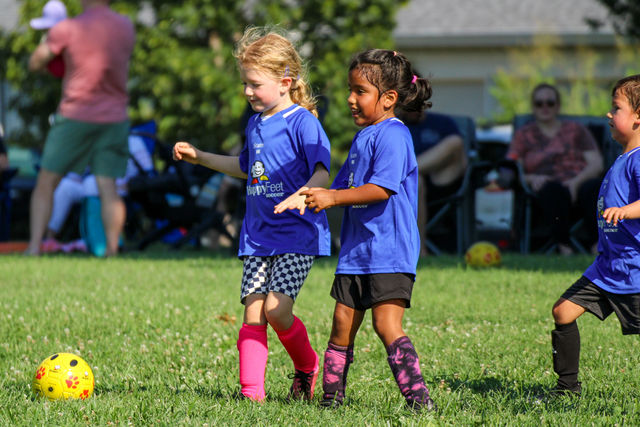
Encouraging Eye Contact Verbal Communication High-Energy Shawnee Kids

Home › HappyFeet KC Blog › Socialization & Emotional Growth Gentle strategies for Shawnee parents of busy, active toddlers who would rather run than talk. If you’re in Shawnee, HappyFeet KC offers toddler soccer classes designed for exactly this — check your local schedule for a free trial. Last updated May 2026 Serving Kansas City families since 2003 · 30+ partner schools Your Shawnee toddler is a force of nature: always running, always climbing, always on to the next thing before the last thing is finished. At the Shawnee Town 1929 museum, they are the one who barrel-past the exhibits and heads straight for the open field. At the Shawnee Mission Park playground, they are the child who scales the tallest slide while other kids are still figuring out the ladder. You love their energy, but you also worry: when do they slow down enough to look someone in the eye and say their own name? For high-energy children, verbal communication and eye contact often take a back seat to physical activity—not because they cannot connect, but because their bodies are moving faster than their mouths. Why This Matters for Shawnee Families Shawnee is a community built for active kids—with Shawnee Mission Park’s 1,600 acres of trails, the Shawnee Civic Centre playground, and the beloved Wonderscope Children’s Museum in nearby Roeland Park. But high-energy toddlers can breeze through these experiences without ever practicing the quiet social skills—eye contact, turn-taking in conversation, using words instead of gestures—that they will need in a preschool classroom. The challenge for Shawnee parents is finding ways to slow down the action just enough to build communication skills without squashing the very energy that makes their child wonderful. The goal is not to make a high-energy child sit still; it is to weave communication practice into moments of connection during or after the activity they love. 3 Ways to Build Communication in Active Kids Pause before the slide. At the top of the slide at the Shawnee Civic Centre playground, kneel down and say: “Look at my eyes, then you can go!” A brief moment of eye contact before the reward builds the habit naturally—and the slide provides powerful motivation. Narrate the action. High-energy children often miss social cues because they are moving too fast to notice. Say: “Did you see that little girl smile at you? She wants to play. Let us say hi together.” You are their social mirror until they develop their own. Use the “waiting face.” When your child grabs your arm to get your attention, freeze and make a gentle, expectant face. Model: “Tap my arm and wait for me to look at you. Then you can tell me.” This teaches that communication is a two-way street, not a demand. What to Look for in a Program For a high-energy child, look for a program that channels their physical drive into structured activity—not one that requires them to sit still. The best programs use movement as the reward for communication: you ask for a turn, you get to run; you make eye contact, you get to kick. A coach who is energetic themselves and who celebrates effort over compliance will be a much better fit for your active Shawnee toddler than a quiet, sit-in-circle class. How Happy Feet Kansas City Can Help Happy Feet Kansas City is built for high-energy children. Our classes at the Overland Park location—a quick drive from Shawnee—use movement as the foundation for every skill we teach. Children are on their feet, running, kicking, and playing from the moment class starts. But woven into that activity are natural opportunities for communication: waiting for the coach to call your name before you go, looking at a buddy before you pass the ball, and answering Bob the Ball’s question before the next game begins. We meet your child where they are—in motion—and gently build the communication skills they need alongside the physical activity they crave. Try a free class at our Overland Park location and see how movement and communication can grow together. Give your high-energy Shawnee toddler a program that meets them in motion.
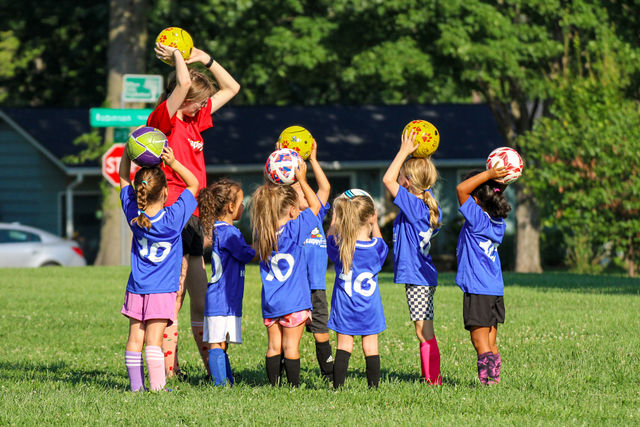
Why Year-Round Soccer Beats Seasonal for KC Kids

Home › HappyFeet KC Blog › Why Year-Round Soccer Beats Seasonal Why Year-Round Soccer Beats Seasonal: The Case for Stacking Spring 1, Spring 2, and Summer By HappyFeet KC Editorial • Updated May 10, 2026 • 7 min read • Serving KC families since 2003 TL;DR Most Kansas City families sign up for one soccer season per year. But at HappyFeet KC’s 4v4 league, the real advantage goes to families who stack Spring 1, Spring 2, and Summer. Why? Because 24 weeks of soccer beats 8. No skill decay between seasons. No weather cancellations (indoor facility). The same coach and teammates across all three. At $189 per 8-week season, it’s the most efficient path to real skill development for K–3rd graders in KC. If your K–3rd grader plays soccer in Kansas City, they probably play one season per year. Spring only. Or fall only. Maybe both if you’re ambitious. Here’s the problem with that approach: soccer skills don’t hold steady during a 4-month break. They regress. The dribbling moves your child learned in April are noticeably rustier by August. By October, they’re starting nearly from scratch. For a 5- to 8-year-old in the prime developmental window for motor skill acquisition, that lost time is expensive. HappyFeet KC offers something different: three consecutive 8-week seasons, all indoors, with the same coaching staff and the same structure. Spring 1 (March–May), Spring 2 (May–June), and Summer (July–August). You can do one. You can do two. Or you can stack all three and watch what consistent year-round development actually looks like. 3× More soccer development time when you stack all three seasons (24 weeks vs. 8). That’s 2,400+ additional ball touches your child doesn’t get with seasonal-only play. The Skill Decay Problem: What Happens Between Seasons Youth sports research consistently shows that young athletes lose fitness and technical gains during extended breaks. For K–3rd graders, the summer gap between a spring-only season and fall soccer can be 4–5 months. That’s long enough for measurable skill regression in dribbling, passing accuracy, and game awareness. This isn’t a criticism of taking breaks. Every child needs downtime. But there’s a difference between a planned rest week and an involuntary 4-month gap because the league simply doesn’t offer anything between spring and fall. At HappyFeet KC, the three-season structure eliminates those gaps. Spring 1 ends in early May. Spring 2 starts the next week. Spring 2 ends in late June. Summer starts in early July. The gaps between seasons are a week or two at most — enough rest to recharge, not enough time to lose what your child built. Stacking Spring 1, Spring 2, and Summer at HappyFeet KC’s indoor 4v4 league means 24 weeks of continuous skill development with the same coach and teammates — no weather cancellations, no skill decay between seasons. The Math: 8 Weeks vs. 24 Weeks of Touches HappyFeet KC’s 4v4 league uses the small-sided format recommended by U.S. Soccer for children under 8. Four players per side on a smaller indoor field means each child averages 150+ ball touches per session — about 5× more than they would get on a full-size outdoor field. Now do the math for a full year: Scenario Weeks Touches/Week Total Touches/Year Stack all 3 seasons 24 150+ 3,600+ Spring 1 only 8 150+ 1,200+ Spring 1 + Spring 2 16 150+ 2,400+ Seasonal rec (outdoor) 8–10 30–50 300–500 A child who plays one 8-week 4v4 season gets 1,200+ touches. A child who plays all three gets 3,600+. That’s not a 3× difference in time — it’s a 3× difference in opportunity. More touches mean faster skill acquisition, more confidence on the ball, and more fun. The kids who stack seasons don’t just stay even with their peers who took the summer off. They pull ahead. Indoor = No Weather Gaps (This Matters in KC) Kansas City spring and summer weather is not reliable. Thunderstorms roll through. Extreme heat advisories ground outdoor games. When you have an 8-week season and lose 2 weekends to weather, that’s 25% of your soccer gone. For a K–3rd grader who waits all week for game day, a canceled game is a genuine disappointment. HappyFeet KC’s 4v4 league plays at the KC Legends indoor facility at 9701 W 67th St in Merriam. Four climate-controlled turf fields under one roof. Games and practices happen as scheduled, every time. In spring, it’s dry while thunderstorms pass overhead. In summer, it’s air-conditioned while the thermometer hits 95. This is a structural advantage that seasonal-only families don’t experience until they try indoor. When your child is guaranteed 8 games and 8 practices per season — not 6 because of rainouts — the season delivers what it promises. Compound Skill Growth: Each Season Builds on the Last The most powerful argument for stacking seasons isn’t the raw number of weeks. It’s what happens when skills build across those weeks without a reset. In Spring 1, your child learns the basics: how to dribble in space, how to pass to a teammate, what it means to “spread out” on a 4v4 field. In Spring 2, those fundamentals are the starting point — now the coach introduces combination play, defensive shape, and decision-making under pressure. By Summer, the same group is running patterns and playing with a level of coordination that seasonal-only players take twice as long to develop. This compounding effect is why the third season matters most. The first season establishes the foundation. The second reinforces it. The third unlocks the next level of play. Same Coach, Same Teammates, All Year In seasonal rec soccer, every season comes with a reset: new coach, new teammates, new dynamic. For a shy or transitioning 5- to 8-year-old, that reset is a real obstacle. They spend the first 2–3 weeks of a short 8-week season just getting comfortable. Year-round 4v4 at HappyFeet KC means your child keeps the same professional coach across stacked seasons. That coach knows your kid’s strengths, weaknesses, and what motivates them. Teammate requests are… Continue reading Why Year-Round Soccer Beats Seasonal for KC Kids

Summer Indoor Soccer KC Kids: Why Indoor Beats Outdoor

  Home / 4v4 Soccer Leagues / Summer Indoor Soccer KC Kids Summer Indoor Soccer in Kansas City: Why Your K–3rd Grader Should Play Inside  Summer 2026 • 5 min read • Serving KC families since 2003 The short version Kansas City summers mean 95°F+ heat, thunderstorm delays, and canceled outdoor games. HappyFeet KC’s Summer 4v4 league runs July 6–August 23 at a climate-controlled indoor turf facility in Merriam — 68–72°F, no rainouts, no lightning delays, and 5× more touches per game for your K–3rd grader. Registration is open now at $189. If you’re in the Northland, HappyFeet KC offers toddler soccer classes designed for exactly this — check your local schedule for a free trial. July and August in Kansas City are brutal for outdoor sports. The heat index regularly pushes past 100°F. Thunderstorms roll in without warning. Lightning delays eat up Saturday mornings, and some games get canceled entirely — leaving your kid dressed and ready with nowhere to play. This is not a hypothetical. In recent years, Kansas City’s largest youth soccer organizations have been forced to implement emergency heat policies after hundreds of games were played in extreme conditions that prompted parent complaints and local news investigations. Some associations now cancel or shorten games automatically when the heat index crosses a threshold — which, in July and August, means most weekends are affected. There is a better option for K–3rd graders. HappyFeet KC’s indoor 4v4 league runs through the hottest months of the year at the KC Legends indoor facility in Merriam — where the temperature never breaks 72°F and no game has ever been canceled for weather. Summer indoor soccer at HappyFeet KC gives K–3rd graders guaranteed weekly games in a climate-controlled facility, with professionally coached 4v4 matches that deliver 5× more ball touches than outdoor rec soccer — no heat, no storms, no cancellations. What KC Summer Means for Youth Soccer Kansas City’s climate is not kind to outdoor athletes in July and August. Average high temperatures hit 90°F by early July, but the humidity pushes the heat index well above 100°F on most game days. The National Weather Service issues heat advisories for the metro area multiple times each summer. For outdoor youth soccer leagues, this creates a cascade of problems: Heat-related delays and cancellations. Multiple KC-area associations now enforce strict heat policies. Games are delayed or canceled when the heat index exceeds 95°F or 100°F, depending on the organization. Thunderstorm unpredictability. Summer storms develop fast in the Midwest. Lightning within 8 miles means an automatic 30-minute delay restarting each time. Dehydrated, miserable kids. Even when games proceed, K–3rd graders struggle to perform in extreme heat. Water breaks help, but a 5-year-old playing 7v7 on a full-size field in 95°F weather is not a recipe for fun or development. Sunscreen, bug spray, and reapplication. Outdoor summer soccer requires a full pregame routine that none of us enjoy. The local news coverage of this issue has been extensive. When KMBC reported on youth soccer heat complaints in Kansas City, the response from league administrators was telling: multiple organizations adopted new heat policies, but the fundamental problem — outdoor fields in a Midwestern summer — can’t be policy-solved. It can only be avoided. 68–72°F The year-round temperature inside the KC Legends indoor facility. No heat advisories, no lightning delays, no game-day uncertainty. Indoor vs. Outdoor Summer Soccer: How They Stack Up The difference between indoor 4v4 at HappyFeet KC and a typical outdoor rec league in July is not subtle. Here is the head-to-head: Factor Indoor 4v4 — HappyFeet KC Outdoor Summer Rec Temperature 68–72°F, climate-controlled 90–105°F heat index Weather risk Zero — indoor facility, no cancellations Heat, lightning, thunderstorms — frequent delays/cancellations Format 4v4 with boards (max touches) 7v7 or 9v9 on full field (lots of standing) Ball touches per game 5× more than outdoor rec Limited — fewer players touch the ball consistently Coaching Professional Legends coach included Parent volunteer (varies widely) Practice included 1 hour/week practice + weekend game Usually game-only; practice depends on coach Season length 8 weeks (July 6 – Aug 23) Varies (6–8 weeks, subject to weather makeup) Cost $189 early / $199 after June 21 $85–$150+ depending on league The cost difference is real. Outdoor rec leagues are typically cheaper — some as low as $85 for a season. But you are paying for what you get: parent volunteers, weather-dependent scheduling, and a format where your K–3rd grader may touch the ball only a handful of times per game. The $189 for indoor 4v4 buys guaranteed games, air conditioning, professional coaching, and 5× more development per minute. Why 4v4 Builds Better Players (Especially in Summer) HappyFeet KC’s 4v4 league follows the U.S. Soccer Development Initiative recommendation for young players. The small-sided format delivers what every K–3rd grader needs most: more time with the ball. On a full-size outdoor field with 7 or 9 players per side, a child might touch the ball 20–30 times in a whole game. In 4v4 on a smaller indoor field, that number jumps to 100–150 touches — the 5× figure the program cites. At this age, touches are development. Every dribble, pass, shot, and tackle is a learning moment. The indoor format adds another advantage: boards. The ball stays in play constantly. There are no throw-ins, no goal kicks that eat up 20 seconds, and no out-of-bounds delays. Kids play continuously, which means more decisions per minute and better game awareness. 5× More ball touches per game in 4v4 compared to full-field outdoor soccer. At K–3rd grade, touches equal development. Summer 2026: Dates, Pricing & Registration The Summer 2026 4v4 session runs for 8 weeks from July 6 through August 23, 2026. The registration deadline is June 21, 2026. Here is what the summer program includes: Weekly practice: 1-hour session with a designated KC Legends professional coach Weekend games: 4v4 matches on the indoor turf at KC Legends facility Uniform: Team jersey included in registration Every game guaranteed: Zero weather cancellations. Ever.… Continue reading Summer Indoor Soccer KC Kids: Why Indoor Beats Outdoor

KC Kindergarten Soccer: Start at Age 5-6

Home › HappyFeet KC Blog › Kindergarten Soccer in Kansas City Kindergarten Soccer in Kansas City: Starting Your 5 or 6 Year Old the Right Way By HappyFeet KC Editorial • Updated May 10, 2026 • 6 min read • Serving KC families since 2003 TL;DR Kindergarten is the ideal age to start organized soccer in Kansas City, but the format matters more than the age. HappyFeet KC’s 4v4 league uses small-sided indoor fields (4 players per side) so every 5-6 year old gets 5× more ball touches than a rec league would, with professional coaches and zero weather cancellations. Seasons run year-round at the climate-controlled KC Legends facility in Merriam, starting at $189 per 8-week season. If your child is starting kindergarten this year and you’re thinking about soccer, you’re not alone. Kindergarten is when most Kansas City parents begin looking at organized sports. But the question isn’t really whether your 5 or 6 year old is ready for soccer — it’s what kind of soccer they should start with. A kindergartner playing on a full-size outdoor field with 7 or 8 teammates might touch the ball 3 or 4 times in an entire game. The same child in a 4v4 game on a smaller indoor field touches it 30 to 50 times. Same age. Same skill level. Completely different experience. The format your child starts with shapes how they feel about the sport. Get it right, and they stay engaged, develop skills, and have fun. Get it wrong, and they spend most of their time running after a ball that never reaches them — and decide soccer “isn’t for them.” What Age Should a Child Start Soccer in Kansas City? Children develop readiness for organized sports at different rates, but most are ready for structured soccer between ages 5 and 6 — their kindergarten year. At this age, kids can follow multi-step instructions, understand basic rules like which direction to kick, and sustain focus for 45-60 minute sessions. The American Academy of Pediatrics suggests that before age 6, sports should emphasize play over competition. U.S. Soccer’s grassroots curriculum recommends 4v4 as the optimal game format for all players under 8. The reasoning: younger players need maximum ball contact to develop, and smaller-sided games deliver that naturally. In Kansas City, options for kindergarten-age soccer range from recreational leagues (Sporting Rec, Kansas Rush, La Liga KC, JOCO Parks & Rec) to class-based programs (Soccer Stars, Sporting Stripes) to small-sided leagues like HappyFeet KC’s 4v4. The table below shows how they compare for a kindergartner. Feature HappyFeet KC 4v4 Sporting Stars (Ages 5-8) Rec League (Sporting Rec, Kansas Rush) Sporting Stripes (Ages 2-5) Format 4v4 small-sided games + weekly practice Class-based, 10:1 ratio, no games 7v7 or larger on full-size fields 30-45 min classes, no games Touches per session 150+ (5× more) Moderate (small-group drills) 10-30 touches per game Moderate (class-based) Coach Professional KC Legends coach Professional coach Parent volunteer Professional coach Location Indoor turf, Merriam Indoor/outdoor, 7 metro locations Outdoor, various parks Indoor/outdoor, 9+ locations Weather policy Never canceled (indoor) Depends on location Weather-dependent Depends on location Season length 8 weeks, year-round 4-week sessions 8-10 weeks, seasonal Rolling enrollment Cost $189/season $90-$130 per 4-week session $95-$130 per season ~$50/month Why 4v4 Is the Best Format for Kindergarten Soccer U.S. Soccer didn’t arrive at 4v4 by accident. The federation’s Player Development Initiative, rolled out in 2015 after studying youth systems in Germany, Netherlands, and Spain, mandates 4v4 for the youngest age groups. The logic is simple: skill develops through repetition, and repetition requires the ball. On a 4v4 field, no player is more than a few steps from the ball at any time. There’s no “weak side” to get lost on. No waiting for a teammate to dribble 40 yards before a pass arrives. Every play involves every child. 5× More ball touches per game in HappyFeet KC’s 4v4 format compared to a full-size outdoor field. 30-50 touches per kindergartner per session instead of 3-10. Beyond the numbers, 4v4 teaches the right habits. Kids learn to support each other, find space, and make quick decisions because the ball is always nearby. They’re not learning to wait their turn — they’re learning to play. HappyFeet KC’s 4v4 league takes this a step further. The curriculum uses the same Bob the Bobcat philosophy that makes HappyFeet preschool classes engaging, leveled up for the kindergarten age band. Coaches speak in terms kids understand, and the “no guilt, no shame, no blame” standard means every child feels safe to try, fail, and try again. Inside a 4v4 Session: What Kindergarten Soccer Looks Like at HappyFeet KC A typical week in HappyFeet KC’s 4v4 league includes two components: one weeknight practice and one weekend game. Practice (1 hour, weeknight): A professional KC Legends coach runs small-group drills focused on dribbling, passing, and shooting. With only 4-6 kids on a team, each child gets individual attention. Practices use age-appropriate games and challenges rather than laps or lines. The hour ends with a short scrimmage. Game (48 minutes, weekend): Four players per side on a small indoor turf field. No goalies at this age — everyone is on offense and defense. The game flows continuously because the field is small enough that the ball rarely goes out of play. Coaches rotate players regularly so everyone gets equal time. The entire session happens indoors at the KC Legends facility in Merriam, where four turf fields run simultaneously. Parents watch from the sideline or seating area. The temperature is comfortable year-round. Indoor vs. Outdoor Soccer for 5-6 Year Olds Kansas City weather is a real factor in youth sports. Spring thunderstorms can cancel Saturday games on short notice. Summer heat indexes over 100°F make outdoor play risky for young kids. Fall is more predictable but still brings cold fronts and rain. For a 5 or 6 year old just starting soccer, consistency matters more than location. An 8-week season where 2 or 3 games get rained out means your… Continue reading KC Kindergarten Soccer: Start at Age 5-6

Request a Free Trial Class

Fill out the form below and we'll be in touch within 24 hours.

Please enter your name.
Please enter your child's name.
Please enter a valid email address.
Please enter a phone number.
Please select your child's age.